
Light-coupled NMR
Photo-CIDNP hyperpolarises small molecules with a pulse of light, in water, at room temperature. One scan of a few seconds is enough at low micromolar concentration.
Applications
Fragment screening
A fragment that binds the target loses its photo-CIDNP signal. Each sample takes one scan of 2 to 5 s.
Affinity determination
Dissociation constants in the micromolar to millimolar range, from a short titration of the target.
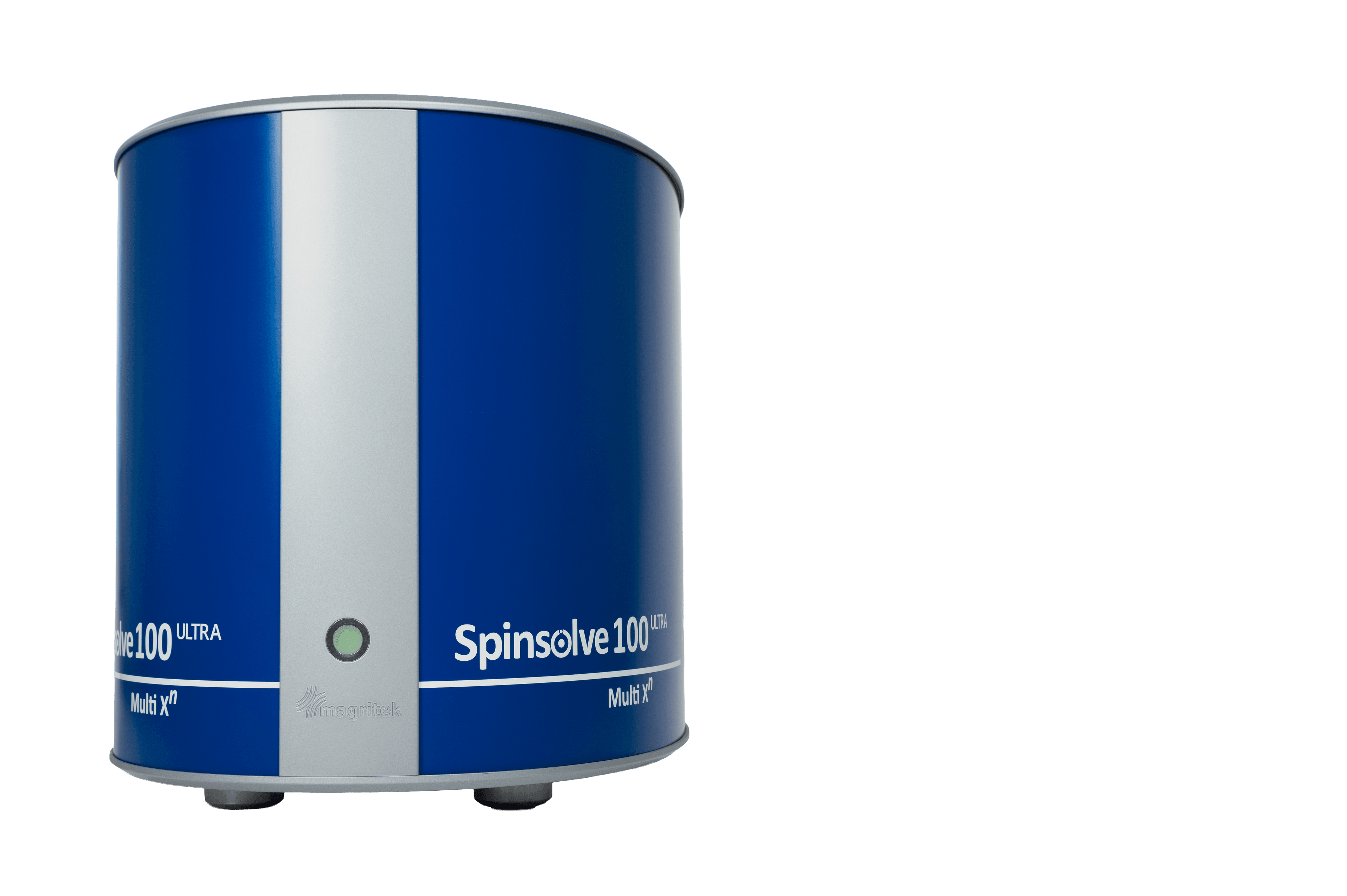
SmartSpin™
The light-coupled NMR technology behind these measurements, on Spinsolve. [ONE-LINE DESCRIPTION]
Open resources
A database of photo-CIDNP activity and the algorithms to predict it. Open to researchers. A consortium initiative.
CIDNP database
Which molecules and dyes polarise, and how strongly. Measured under documented protocols and scored from 0 to 100.
About the database →Algorithms
Photo-CIDNP prediction for small molecules and proteins, and a model of polarisation over time. Open source.
About the algorithms →